The mission statement was two meters tall in the lobby. Upstairs, in a meeting room with the blinds down, we were cutting partner incentives for the third quarter in a row, and nobody at that table mentioned the lobby.
You learn a company’s real motto in the quarter it decides to stop losing money. Everything before that is typography.
I want to make that concrete with two companies that passed the test decades apart, and two from my part of the world taking it right now.
Trust, as a balance sheet item
American Express started selling traveler’s cheques in 1891. Stripped down, the product is a piece of paper that a hotel clerk in Cairo accepts from a total stranger, because a company in New York promises to make him whole. Nothing backs it but that promise, which is to say the trust is the product.
Amex behaved accordingly: it held reserves against the outstanding balance of cheques, idle money sitting still to guarantee paper. A slogan costs nothing, whereas a reserve policy shows up on the balance sheet every quarter, forever.
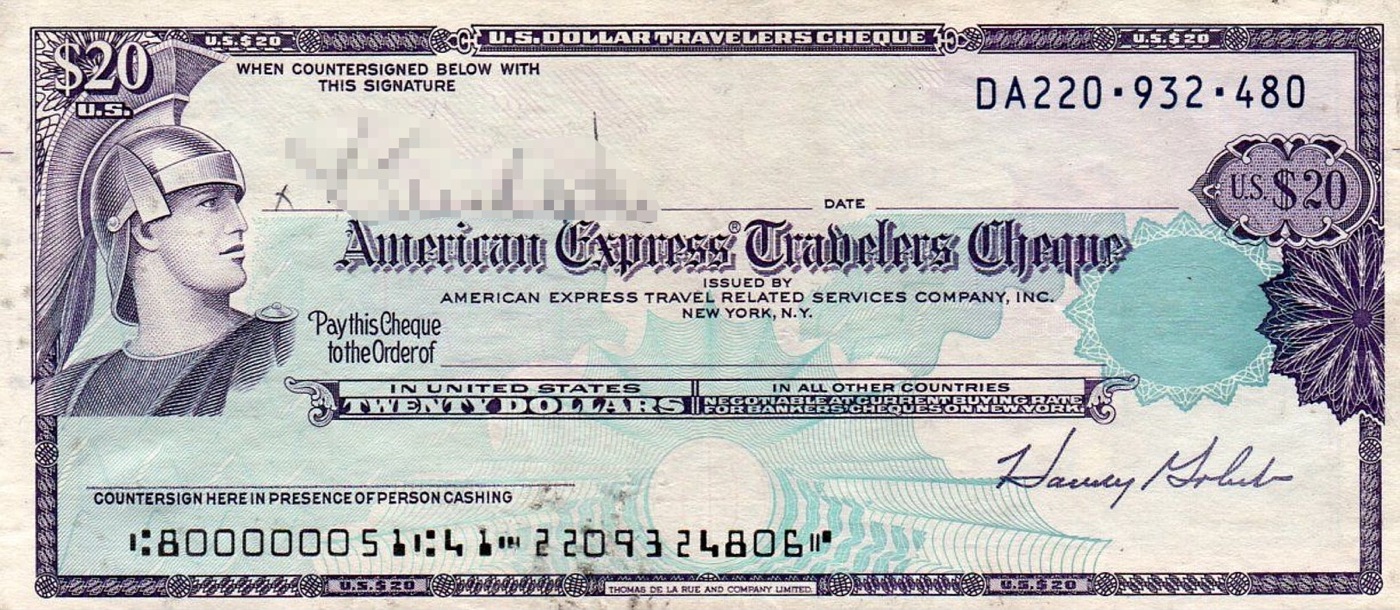 A twenty dollar American Express traveler’s cheque. The paper is worthless unless every stranger in the chain believes the issuer. Photo: public domain, via Wikimedia Commons.

The real test came in 1963, when a warehousing subsidiary had certified storage tanks supposedly full of soybean oil that turned out to be mostly seawater, and the traders holding those receipts were owed a fortune. Amex could have argued the liability died with the subsidiary and let the lawyers hold the line. Instead it paid out tens of millions of dollars, real money in 1963, to make counterparties whole on a scandal it could plausibly have dodged. The stock got hammered, and a young fund manager in Omaha noticed that people at restaurant tills were still handing over the card and the cheques as if nothing had happened, then bet a huge slice of his partnership on that observation.
“Don’t Leave Home Without It” arrived in the mid seventies, from Ogilvy, with Karl Malden’s reassuring face attached for the next two decades. The sequence matters more than the slogan: the mechanism ran for eighty years before the advertising arrived to describe it, which is the reverse of the order most companies use.
Obsession, as a mechanism
Amazon’s mission has read the same way for roughly three decades: be Earth’s most customer-centric company. Fine, so does every deck in every data room. What makes me believe Amazon’s version is that it keeps surfacing as mechanisms that cost real money.
Negative reviews, live on the product page, since the late nineties. Publishers hated it, because a one-star review kills the sale. It kills the sale and keeps the customer, a trade Amazon chose to make. Working backwards, where the press release and the FAQ get written before any code. Customer obsession sitting first on the leadership principles, where it gets used in hiring and promotion arguments as a knife, not as wall art. Margins kept thin for years, while analysts begged for profit.
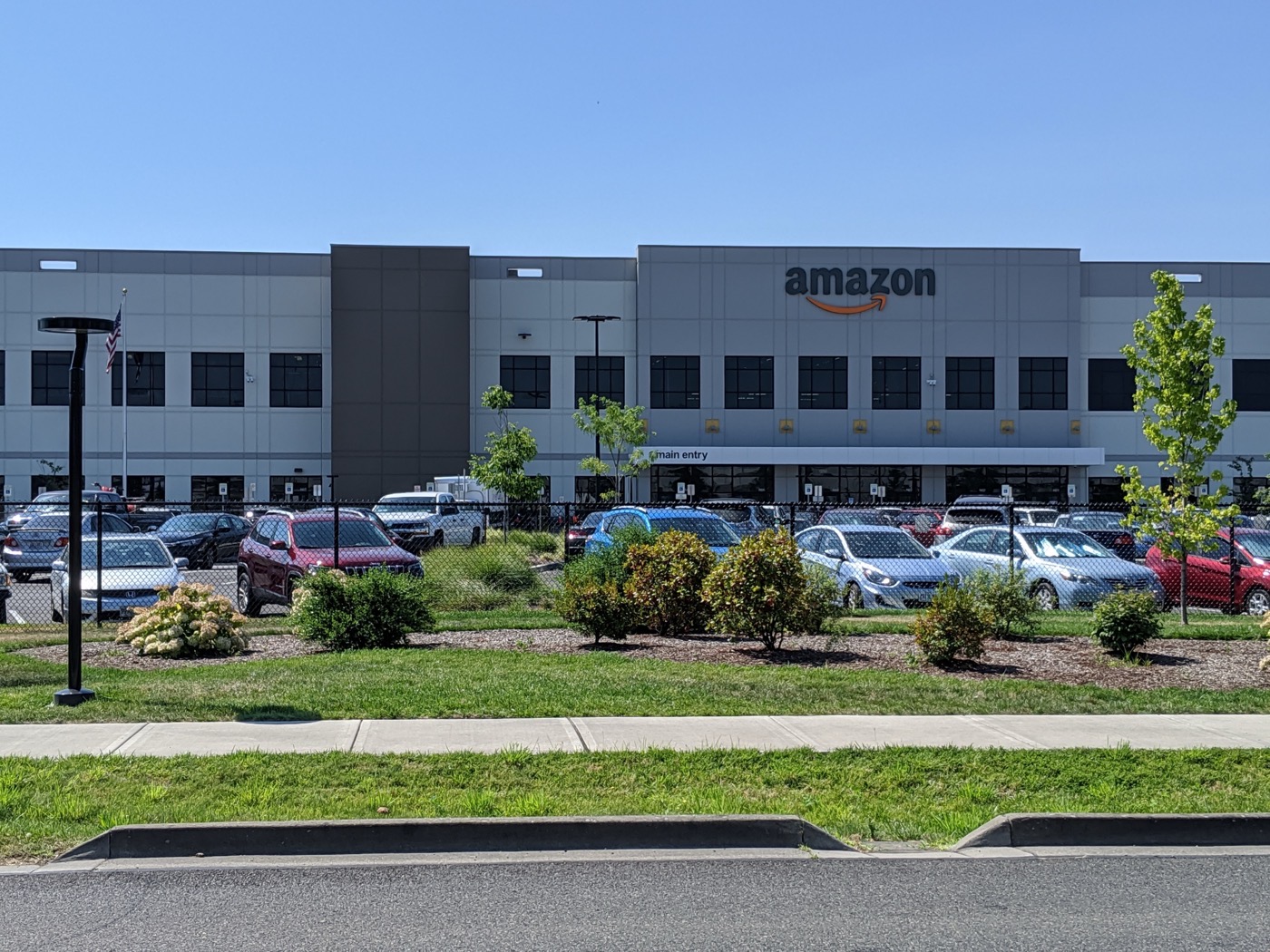 An Amazon fulfillment center in Troutdale, Oregon. The promise on the homepage is funded by buildings like this one, run at margins Amazon keeps thin. Photo: Tedder, CC BY-SA 4.0, via Wikimedia Commons.

Mission statements are free right up until the quarter they are not. In that quarter they become the most expensive line in the budget, and someone has to stand up in a cost review and defend them by name, and whether anyone does is the entire test.
The test, running live in Southeast Asia
Grab’s motto is to drive Southeast Asia forward by creating economic empowerment for everyone. Sea, Shopee’s parent, says it exists to better the lives of consumers and small businesses with technology. I spent years operating platforms in this market, and I want to be fair to both: these are not cynical documents, and the ambition behind them is real. They were written for a region where a huge share of workers are informal and a huge share of adults were unbanked.
But the mechanisms tell a different story. Grab’s machine funds a superapp: rides feed food delivery, food feeds payments, payments feed lending, and subsidies hold the whole loop together. When the public markets demanded profit, incentives got cut and take rates crept upward, and drivers noticed long before any press release acknowledged it. None of this makes the empowerment fake. A driver getting his first formal loan because his trip history became a credit file is a real thing, and I have watched that kind of product change someone’s week. It is not what the machine protects when it comes under pressure.
Shopee’s machine is a game, and I mean that literally, because Sea was a games company first. Coins, streaks, shake-the-phone promotions, live streams, shipping subsidized to nearly nothing. It drives one behavior superbly: price obsession, refreshed daily. When Sea’s squeeze came, the free shipping got trimmed and seller fees ratcheted up across the region, market by market. Consumers kept most of their savings; the small businesses named in the mission statement got a new fee schedule.
(The lobby posters survived every one of these cuts, as posters always do.)
 The supply side of the superapp, waiting on an order. Empowerment and take rate meet at exactly this curb. Photo: PattayaPatrol, CC BY-SA 4.0, via Wikimedia Commons.

The structural difference shows up if you draw the loops side by side.
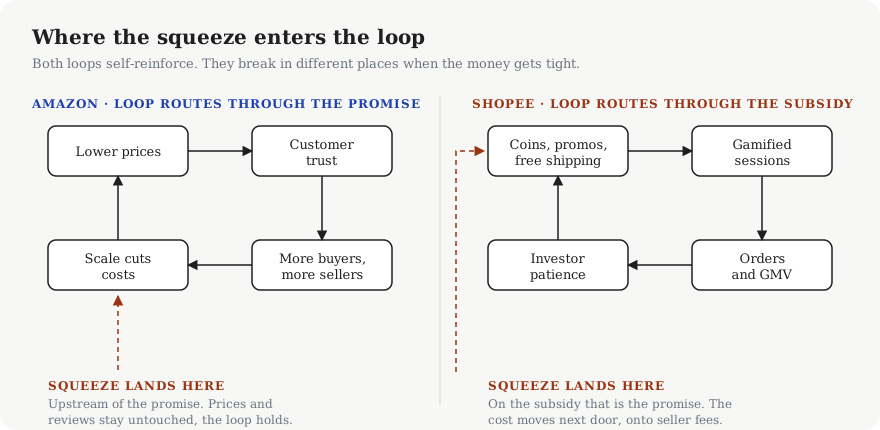 Both loops self-reinforce. The difference is where a margin squeeze enters: Amazon’s cuts land on cost structure upstream of the promise, Shopee’s land on the subsidy that is the promise, so the cost reappears as seller fees.
The squeeze test
I am not accusing anyone of lying. A motto states an aspiration; the mechanism is what a company actually runs, and under pressure the mechanism wins without anyone taking a vote. I have written the empowerment slide myself, at a marketplace I helped run, and I believed every word of it. When our own squeeze arrived, what we protected through three rounds of cuts was checkout conversion, not seller economics. Nobody decided that in so many words; the machine decided, and we ratified it.
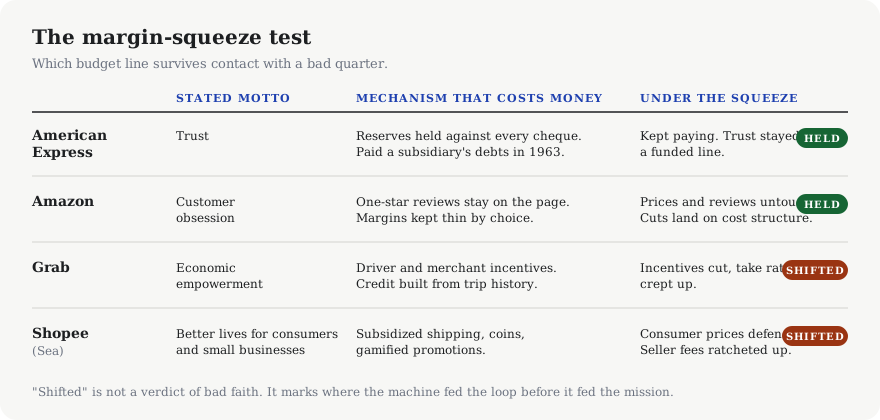 The test is not what the motto says, but which budget line survives contact with a bad quarter.
Amex’s motto survived its squeeze because trust had a budget line, an owner, and a payout history. Amazon’s survives every squeeze because obsession is wired into hiring, reviews, and pricing, places a CFO cannot quietly reach. Grab and Shopee are mid-test, and I genuinely do not know the verdict yet. Both have shipped real empowerment, and both have also shown, under pressure, that the loop gets fed before the mission does.
When a company decides to stop losing money, the one line it does not dare to cut is its real motto. That is the line I read, not the poster in the lobby.